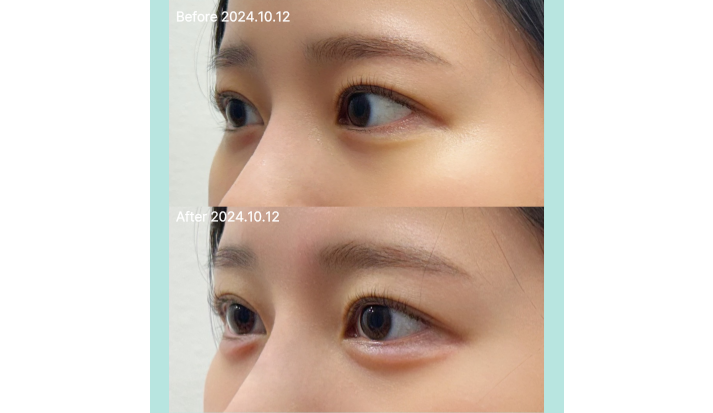
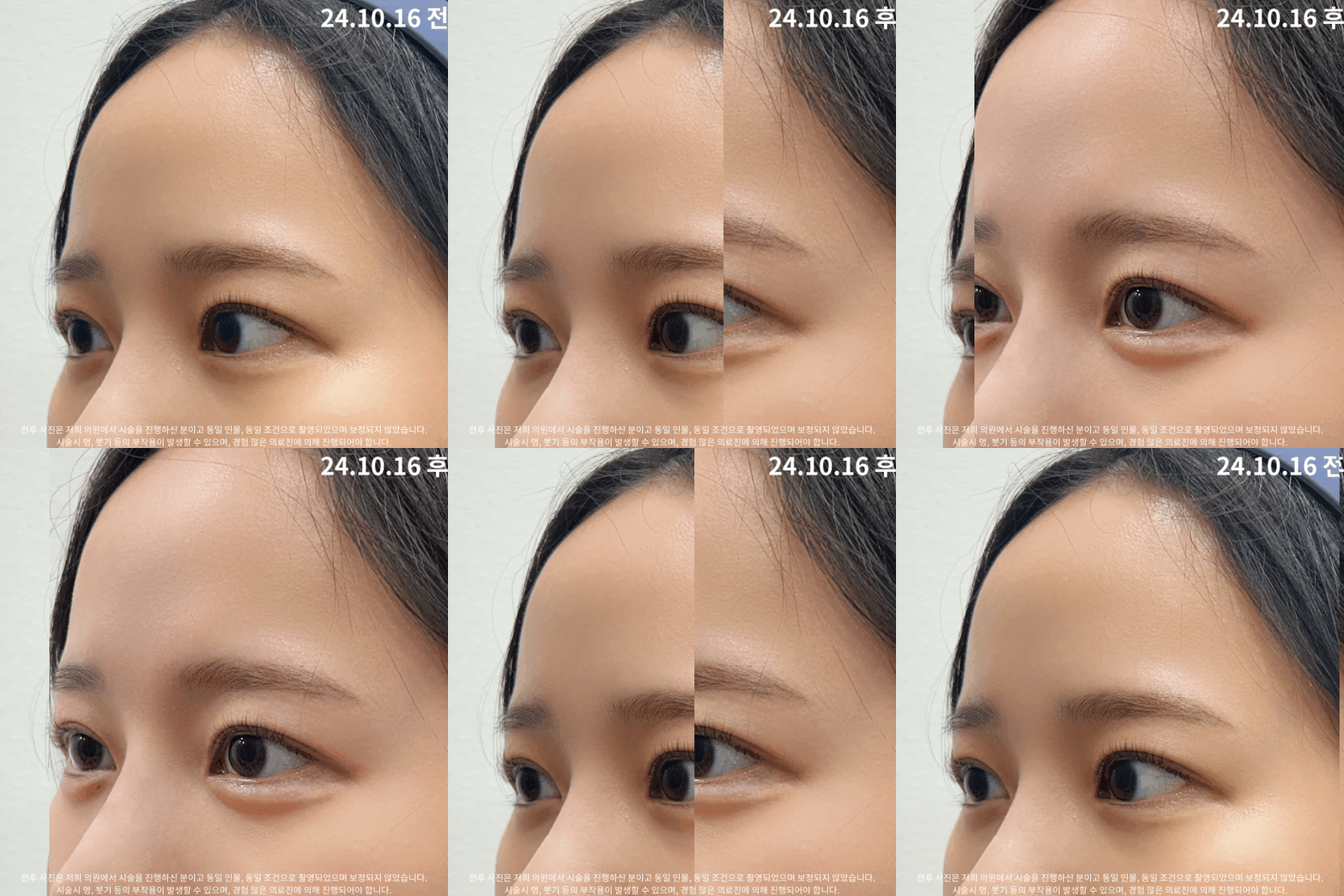
Aegyo-sal (pretarsal orbicularis roll volume structure) refers to the naturally prominent convex volume structure beneath the lower eyelid when the eyes are comfortably open or when smiling. This area, long recognized as a symbol of "youth" and "loveliness" primarily in East Asia, is not merely an aesthetic trend but a highly significant structure from the perspective of facial anatomy and aging science.
Recently, interest in aegyo-sal filler procedures has been increasing in the field of aesthetic medicine, but it is often confused with general 'under-eye fillers' (tear trough/dark circle correction). This column will medically and accurately explain the anatomical principles of aegyo-sal, the clinical evidence and strategies for filler procedures, and the differences from under-eye fillers (tear trough fillers).
1. Anatomy of Aegyo-sal — Structure of the Pretarsal Orbicularis Roll and Fat Pad
Aegyo-sal anatomically involves a complex interplay of two structures.
① Pretarsal orbicularis oculi muscle roll
This structure is formed when a part of the orbicularis oculi muscle, which covers the pretarsus (anterior lamella of the eyelid), contracts during smiling or eye movements, pushing the lower eyelid skin upwards. This muscle contraction is key to forming a natural "under-eye line." Indeed, facial anatomy studies report that the orbicularis oculi muscle in the pretarsal zone critically contributes to creating the convex line beneath the eye.
② Pretarsal fat pad
Some researchers report the presence of a small amount of fat tissue in the inferior border of the lower eyelid, explaining that this may contribute to the convexity of aegyo-sal. However, in most cases, the volume of aegyo-sal is primarily driven by muscle structure, and the contribution of fat components varies greatly among individuals.
It is important that aegyo-sal is not merely an "area where fat accumulates," but a complex three-dimensional structure combining dynamic muscle contraction and skin elasticity. This directly influences filler injection strategies.
2. Correlation between Aging and Aegyo-sal — Why Aegyo-sal Disappears with Age
Clinical studies consistently report that aegyo-sal tends to diminish with aging. The main mechanisms are as follows:
① Decrease in skin elasticity
As collagen (type I, III) and elastin in the dermis decrease, the lower eyelid skin thins and sags. In this process, the elasticity of the skin supporting the pretarsal muscle roll weakens, causing aegyo-sal to flatten. Particularly, cumulative UV exposure (photoaging) accelerates dermal matrix degradation, hastening the loss of elasticity in the periorbital skin.
② Changes in orbicularis oculi muscle tone
With aging, the volume and tone of the muscle itself change, which can weaken the prominence of the pretarsal roll. Additionally, a decrease in the subcutaneous fat layer makes the muscle contour less visible on the skin.
③ Confusion between orbital fat prolapse and under-eye fat bulging
The "under-eye bulging" commonly observed in middle-aged and older adults is due to orbital fat prolapsing forward due to weakening of the orbital septum, which aesthetically gives a "bulging and tired impression." This is fundamentally different from the natural aegyo-sal of younger individuals, and accurately distinguishing between these two is the first step in clinical diagnosis.
Therefore, aegyo-sal filler treatment should not merely add volume, but be a three-dimensional approach to reconstruct a youthful and natural volume in the area.
3. Aegyo-sal Filler vs. Under-Eye Filler (Tear Trough Filler) — Critical Differences in Anatomical Location and Purpose
One of the most common misunderstandings in clinical practice is confusing "aegyo-sal filler" with "under-eye filler (tear trough filler)" as the same procedure. The two procedures differ in injection location, correction purpose, and characteristics of the filler used.
Under-eye filler (Tear trough filler)
The tear trough refers to the concave structure along the medial inferior orbital rim around the eyeball. Volume loss in this area causes shadows that resemble dark circles and a tired impression. The purpose of tear trough filler is to fill this concave area to create a sense of dimension and a brighter impression, and the injection layer is primarily deep, above the periosteum or below the muscle.
Aegyo-sal filler
In contrast, aegyo-sal filler is a procedure that injects a very small amount of soft filler directly beneath the lower eyelid (pretarsal zone) into the superficial layer just below the skin (dermal-subcutaneous junction) to form a convex volume line. The injection location is much more superficial than the tear trough, and the amount used is very small (0.1~0.5cc).
Comparison of Key Differences
- Anatomical Location: Tear trough (concave groove below the medial eye) vs. Aegyo-sal (convex line directly below the lower eyelid)
- Correction Purpose: Tear trough (improvement of dark circles/concave shadows) vs. Aegyo-sal (convexity below the lash line/creation of charming eyes)
- Injection Layer: Tear trough (deep, submuscular to supraperiosteal) vs. Aegyo-sal (superficial, subcutaneous fat layer)
- Amount Used: Tear trough (approx. 0.5~1cc) vs. Aegyo-sal (0.1~0.5cc, small amount)
- Filler Characteristics: Tear trough (low elasticity/low hydrophilicity preferred) vs. Aegyo-sal (high elasticity/soft/low hydrophilicity preferred)
Confusing the two procedures and injecting into the wrong layer or injecting an excessive amount can lead to unnatural bulging resembling orbital fat prolapse, Tyndall effect (filler appearing bluish), persistent swelling, and other side effects.
4. Injection Layer and Filler Selection Strategy — Standards for Safe and Natural Aegyo-sal
Since aegyo-sal filler is performed in the periorbital area, the following principles must be strictly adhered to.
① Precision of superficial (subcutaneous) injection
The injection layer is the subcutaneous fat layer directly below the lower eyelid, a position deeper than the dermis and shallower than the muscle layer. This layer is very thin, so even a small amount of over-injection can easily appear unnatural. In this area, the practitioner chooses between a cannula or a fine needle based on their judgment.
② Small, gradual approach
Aegyo-sal treatment begins with a small injection of 0.1~0.3cc, and gradual correction is the principle. Injecting an excessive amount at once can make subsequent correction difficult. Especially in this area, due to the influence of gravity and muscle movement, filler tends to migrate, so a conservative approach of adding small amounts gradually is desirable.
③ Criteria for filler material selection
The filler used in this area must have the following characteristics:
- Low hygroscopicity: The periorbital area has a lot of fluid, so highly absorbent fillers can cause swelling/edema.
- High cohesivity: It must maintain its shape without spreading to preserve convexity.
- Appropriate elasticity (G'): It must naturally deform and restore its shape with muscle movements during smiling.
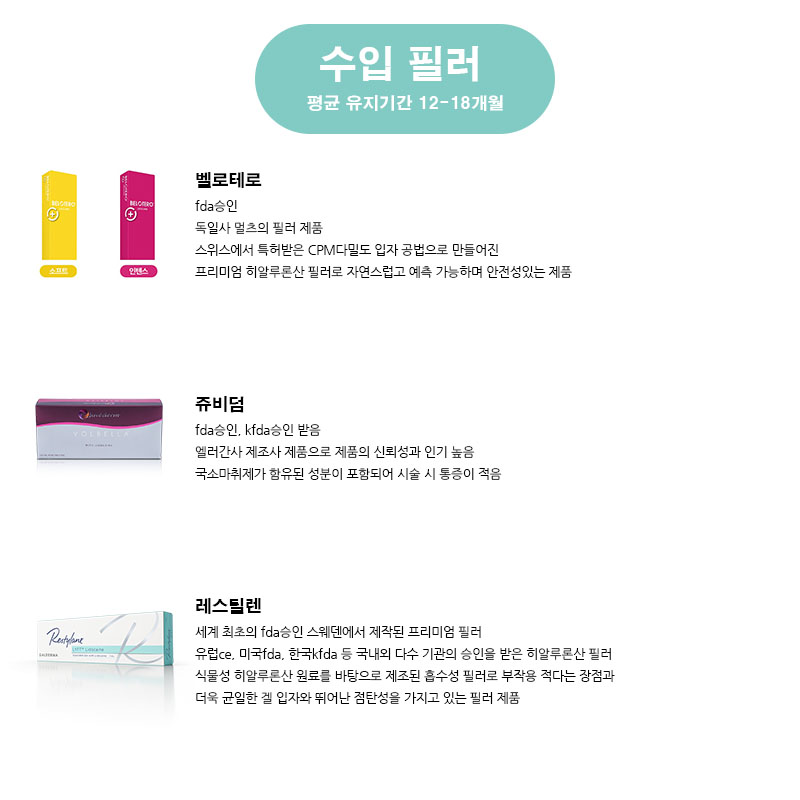
Generally, high-elasticity, low-water-content small-to-medium molecule hyaluronic acid fillers are suitable for this area, while large-volume fillers or highly hydrophilic products are not recommended.
④ Vascular risk management
The periorbital area is dense with facial and orbital blood vessels. Particularly, branches of the angular artery and infraorbital artery pass through this region, so during the procedure, safety principles such as aspiration confirmation and low-pressure, slow injection are essential to prevent intravascular injection. Intravascular injection can lead to extremely rare but serious side effects such as facial necrosis or vision loss, so the procedure must be performed by a medical professional thoroughly familiar with facial vascular anatomy.
5. Suitable Candidates and Exclusion Criteria — Importance of Accurate Indication Selection
Suitable cases for aegyo-sal filler
- When the lower eyelid lacks volume, making the eyes appear plain and dull.
- When there is no natural convex line under the eyes when smiling, making them appear flat.
- When existing aegyo-sal has diminished due to aging.
- When orbital fat prolapse (lower eyelid fat bulging) is absent or very minimal.
Cases where aegyo-sal filler should be avoided
- When orbital fat prolapse has already progressed, causing under-eye bulging: Adding filler can make it appear more unnatural.
- When there is a strong tendency for under-eye swelling (allergies, kidney failure, thyroid disease, etc.): Swelling may worsen after filler injection.
- When the lower eyelid skin is very thin and veins are transparently visible: High risk of Tyndall effect.
- When there is a tendency for lower eyelid laxity (ectropion) or eversion.
- When tissue structure has been altered after previous eye surgery (double eyelid surgery, lower blepharoplasty, etc.).
For these reasons, aegyo-sal filler should only be decided upon after a precise clinical diagnosis of the under-eye structure. It should not be performed merely at the request of "wanting to create aegyo-sal"; rather, the patient's under-eye anatomical structure must be thoroughly evaluated before proceeding.
6. Duration and Management of Major Side Effects
Duration
The duration of aegyo-sal filler generally ranges from 6 to 12 months, varying depending on individual metabolic rate, characteristics of the product used, and injection volume. Since it is injected superficially in small amounts, it may degrade relatively faster than in other areas. Additionally, repetitive muscle movements such as smiling tend to accelerate filler degradation.
Major side effects and management methods
- Tyndall effect: Filler appearing bluish when injected superficially. Can be dissolved with hyaluronidase (Hyalase).
- Chronic swelling: Persistent swelling may occur with the use of highly hydrophilic fillers or excessive injection. In this case, Hyalase dissolution is also required.
- Unnatural bulging due to over-injection: Deformity resembling fat prolapse. Dissolution and redesign are necessary.
- Asymmetry: Due to small injection volumes, left-right differences can be prominent. A strategy of evaluating the degree of asymmetry beforehand and adjusting different amounts for each side is necessary.
In case of side effects, hyaluronic acid fillers can be dissolved with hyaluronidase, so it is safest to undergo the procedure at a medical institution with the capability to manage side effects and a thorough understanding of this process before treatment. BA Clinic provides both Hyalase dissolution and reconstruction procedures for failed fillers, ensuring safe management throughout the entire process before and after treatment.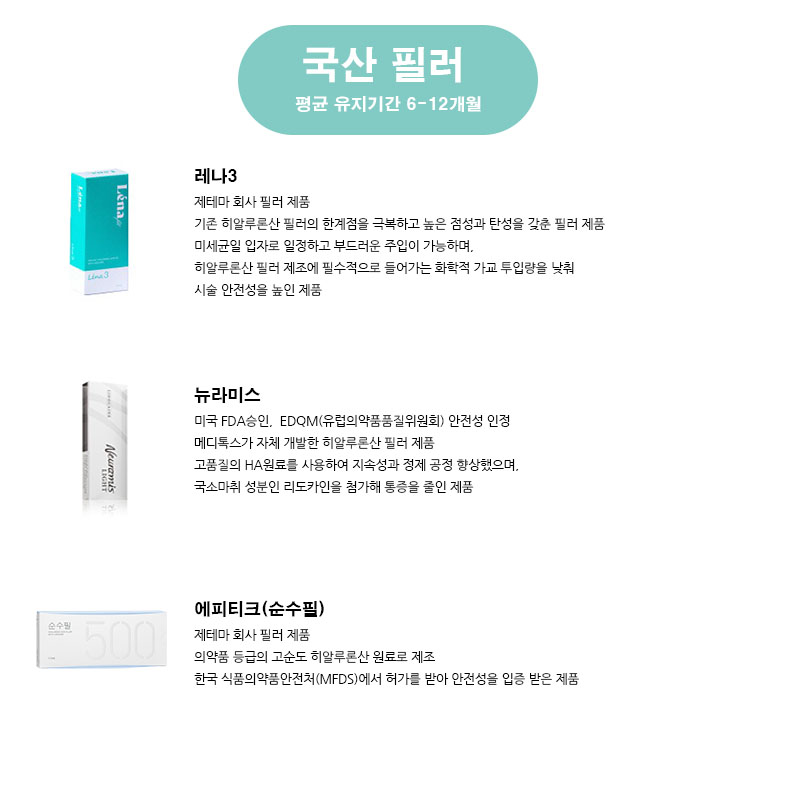
Conclusion — BA Clinic Aegyo-sal Filler Consultation
Aegyo-sal filler is a minor procedure, but because it is performed in the delicate periorbital area, it requires both anatomical understanding and clinical experience. The injection layer, product selection, and indication judgment must all align to achieve natural and long-lasting results, and an accurate differential diagnosis from under-eye filler (tear trough) must precede the procedure.
At BA Clinic, before aegyo-sal filler treatment, we meticulously evaluate the anatomical structure of the lower eyelid, fat pad condition, skin thickness, and vascular distribution, then proceed with a personalized approach. We aim to create natural and charming eyes through a three-dimensional design that considers the entire under-eye structure, not just by adding volume.
If you are concerned about your under-eye structure or are interested in aegyo-sal treatment, please feel free to contact BA Clinic for a consultation.
???? BA Clinic Consultation Information
Phone: 0507-1342-7053
KakaoTalk Channel: @BA Clinic
Operating Hours: Weekdays 10:00~20:00 / Weekends 10:00~16:00 (Open without lunch break)