The Complete Guide to Dark Circles — Accurate Diagnosis and Customized Treatment Strategies Based on Vascular, Pigmented, and Structural Causes
The appearance of dark circles under the eyes is not merely a sign of fatigue. In dermatological practice, dark circles are broadly classified into three types, and the causes and treatment methods vary completely depending on the type. Misdiagnosis can lead to repeated ineffective treatments, and in severe cases, may even worsen the condition. This column explains the pathophysiological classification of dark circles and the treatment strategies for each type based on medical evidence.
1. The Three Types of Dark Circles — Accurate Classification is the Starting Point for Treatment
International dermatological literature broadly categorizes dark circles (periorbital hyperpigmentation, POH) into vascular, pigmented, and structural (shadow) types based on their causes. In actual patients, two or more types often appear in combination, necessitating precise diagnosis beforehand.
-- Type 1. Vascular Dark Circles
This type occurs when the coloration of the venous plexus beneath the skin of the lower eyelid shows through the thin skin. It is characterized by a blue or purplish hue under the eyes and is exacerbated by fatigue, lack of sleep, allergic rhinitis, or the habit of rubbing the eyes.
The causes involve a combination of the following factors:
- The skin of the lower eyelid is the thinnest in the body (less than 0.5mm), making subcutaneous blood vessels easily visible.
- Venous congestion due to impaired venous circulation.
- Deposition of hemosiderin, a breakdown product of hemoglobin, around the blood vessels.
- Histamine release due to allergic reactions, leading to capillary dilation.
Therefore, vascular dark circles require treatments targeting the blood vessels themselves, procedures to increase skin thickness, or approaches to improve circulation.
-- Type 2. Pigmented Dark Circles
This type is caused by melanin pigment deposition in the skin under the eyes, resulting in a brown to dark brown appearance. It is particularly common in East Asians and can extend to the upper cheekbones.
The main causes include:
- Overproduction of melanin in the epidermis due to UV exposure.
- Pigment stimulation from repeated friction, such as rubbing the eyes.
- Post-inflammatory hyperpigmentation (PIH) due to chronic inflammation like atopic dermatitis or contact dermatitis.
- Genetic predisposition (especially high incidence in Korean, Middle Eastern, and South Asian populations).
A 2020 study in the Journal of Cosmetic Dermatology reported that approximately 60% or more of Asian patients with dark circles have the pigmented or mixed type, and in these cases, treatments targeting epidermal melanin and picosecond laser therapy showed significant improvement.
-- Type 3. Structural (Shadow) Dark Circles
This type is not due to skin pigmentation but rather to the appearance of shadows caused by the protrusion of orbital fat, sunken infraorbital bone structure, or sagging skin, making the area appear dark. The intensity of the darkness varies with the light source, and if the dark circles disappear when you pull the skin downward, this type is likely.
The structural causes include:
- Protrusion of under-eye fat: Aging and laxity of the orbital septum cause orbital fat to bulge forward.
- Tear trough deformity: Volume loss in the area connecting the bone and skin under the eyes (arcus marginalis).
- Under-eye festoons due to decreased skin elasticity.
- Concave structure under the eyes caused by skeletal retrusion.
2. Treatment Strategies by Type — Evidence-Based Customized Approach
-- Vascular Dark Circles: Improving Skin Thickness + Targeting Blood Vessels
The approach for vascular dark circles involves thickening the thin skin itself or reducing the visibility of the blood vessels beneath it.
- Rejuran Healer (PDRN Injection): Polynucleotide (PDRN) is injected into the dermis under the eyes to promote collagen synthesis and increase skin thickness. This reduces the visibility of blood vessels and can also be expected to improve skin regeneration under the eyes.
- Skin Booster Treatments: Injecting small amounts of hyaluronic acid-based skin boosters under the eyes increases skin thickness and hydration, which in turn reduces the transparency of blood vessels.
- Laser Toning / Vascular Lasers: In cases of prominent vascular dilation, lasers with wavelengths targeting blood vessels can be used to improve congestion.
-- Pigmented Dark Circles: Melanin Breakdown + Prevention of Re-pigmentation
The key to treating pigmented dark circles is to target and break down melanin in the epidermis while simultaneously preventing UV exposure and re-stimulation.
- Picosecond Laser: This laser uses picosecond pulses to break down melanin pigment through photoacoustic mechanisms. It causes minimal thermal damage, making it suitable for thin skin like that of the lower eyelids, and is particularly effective for epidermal pigmentation. A 2021 study published in Lasers in Surgery and Medicine reported a significant reduction in the MASI score for pigmented dark circles after four sessions of picosecond laser treatment.
- Laser Toning: Repeated low-fluence Q-switched Nd:YAG laser treatments gradually suppress the activity of melanocytes. This is effective for the maintenance management of pigmented dark circles.
- Concurrent UV Protection is Essential: Repeated UV exposure after laser treatment can lead to re-pigmentation. Therefore, consistent use of high-SPF sunscreen is a crucial factor in determining treatment outcomes.
-- Structural Dark Circles: Volume Restoration + Elasticity Improvement
Since structural dark circles are morphological issues rather than pigmentation problems, the approach focuses on restoring volume or improving skin elasticity.
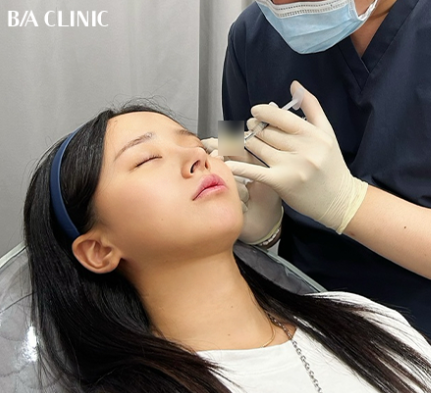
- Under-eye Filler (Tear Trough Filler): Hyaluronic acid fillers are precisely injected into the tear trough area to reduce shadows and smooth the under-eye contour. However, the under-eye area is a high-risk zone with a dense network of blood and lymphatic vessels, so it must be performed by a medical professional with a thorough understanding of anatomy. The choice of filler product and injection depth are critical to avoid the Tyndall effect or swelling.
- Juvéderm / Sculptra (Collagen Stimulators): These treatments induce sustained collagen production, fundamentally improving the thickness and elasticity of the under-eye skin. They offer natural improvement without the unnatural volume increase sometimes associated with fillers.
- InMode Lifting / Ultraformer III: Radiofrequency (RF) or High-Intensity Focused Ultrasound (HIFU) energy is applied to the under-eye skin to enhance elasticity and help reduce puffiness caused by fat prolapse. For cases with accompanying skin laxity, a combined strategy of energy-based treatments and fillers is effective.
3. Combined Dark Circles — The Importance of Combined Treatment by Type
A significant number of patients presenting with dark circles in clinical practice have mixed types, such as pigmented + structural, or vascular + structural. In such cases, single treatments may not be sufficient for improvement, and a combined treatment plan based on accurate diagnosis is necessary.
For example, a patient with shadows due to under-eye fat prolapse (structural) accompanied by pigment deposition from friction (pigmented) would undergo a combined strategy: volume restoration with fillers while simultaneously reducing pigmentation with a picosecond laser. The order and interval of treatments also affect the outcome, necessitating a systematic treatment plan.
4. Precautions During Dark Circle Treatment
- The under-eye area is one of the thinnest skin areas on the body. Improper procedures can lead to risks such as bruising, swelling, the Tyndall effect, or vascular damage.
- Self-care (massage, warm compresses, etc.) may provide temporary relief for vascular dark circles, but it is minimally effective for pigmented or structural dark circles and can even worsen pigmentation due to friction.
- The limited transdermal absorption of commercial eye creams makes them unlikely to replace medical treatments. They mostly provide mild moisturizing and protective effects.
- For individuals with allergic rhinitis or atopic dermatitis, managing the underlying condition and undergoing skin treatments concurrently are important for preventing recurrence.
5. Approach to Dark Circles at BA Clinic
At BA Clinic, we first accurately classify the type of dark circles when diagnosing patients. We do not start treatment based solely on the chief complaint of "darkness under the eyes" but rather identify whether it is vascular, pigmented, or structural, and then propose a treatment direction tailored to each type.
- For predominantly pigmented types: Picosecond laser, Laser toning.
- For vascular types or those with reduced skin thickness: Rejuran Healer, Skin boosters.
- For structural volume loss: Under-eye fillers, Juvéderm, Sculptra.
- For cases with accompanying skin laxity and sagging: InMode Lifting, Ultraformer III.
- For combined types: Staged combination of the above treatments.
All procedures are designed with a thorough understanding of the anatomical structures around the eyes, aiming to maximize treatment efficacy while minimizing unnecessary procedures.


Dark circles are not just a cosmetic issue that makes one look tired. Meaningful improvement is only possible when the correct type is diagnosed and the cause is understood. If you have been struggling with dark circles that self-care cannot resolve, or have long ignored the darkness under your eyes, we invite you to explore the causes step-by-step with BA Clinic.
BA Clinic is located in Dunsan-dong, Daejeon. For appointment bookings and consultation inquiries, please visit our website or call us.