
— Why you should receive treatment from a clinic capable of managing 'complications' from the start**
Filler procedures may seem simple, but they are a prime example of medical technology that requires a high level of understanding of anatomy, material properties, and injection layers. Especially in the case of hyaluronic acid fillers, while they are considered relatively safe due to the advantage of being dissolvable, various complications such as vascular compression, blood flow obstruction, shape deformation due to over-injection, chronic edema, and foreign body reactions frequently occur in actual clinical practice.
For this reason, medical institutions that specialize in treating filler complications share several common characteristics, and receiving treatment at such places is the most effective way to reduce the risk of complications and achieve satisfactory results.

1. Reasons why patients with complications “receive fillers again at the same clinic after treatment”
Patients who visit due to complications often report the following common experiences:
In cases where the original clinic where the procedure was performed only offered simple responses without analyzing the cause or providing a structural diagnosis
In cases where they never received clear explanations about the treatment process, such as filler removal or foreign body reaction management
In cases where they did not receive sufficient guidance on which anatomical layer the problem occurred in, or which filler characteristics contributed to the complication, when a complication arose
On the other hand, institutions accustomed to handling filler complication cases, like BA Clinic, systematically identify everything from the structural analysis of the problem's cause to the filler material, injection layer, and vascular distribution.
Patients who have had such experiences tend to choose the same institution when receiving filler injections again after treatment, for the following reasons:
- A place that accurately explains the ‘cause’ of complications builds trust that the risk of recurrence can be reduced.
By analyzing the vascular structure of the complication site, the injection layer, and the characteristics of the filler used, they explain to the patient in an understandable way how the problem occurred. Medically evidence-based explanations provide great reassurance to patients.
- Patients directly experience the practitioner's anatomical judgment skills during the treatment process.
The process of dissolving incorrect filler or alleviating foreign body reactions is only possible for clinicians who accurately know ‘where, how much, and how to inject.’ During this process, the practitioner's actual competence naturally becomes apparent.
- The more experience with high-difficulty treatments, the more possible it is to design prevention-oriented filler procedures.
Medical staff who have repeatedly dealt with complications accumulate data on which aging structures allow fillers to last longer, which injection depths are stable, and which shape configurations are naturally long-lasting.
Consequently, patients directly experience that the completeness of filler procedures comes from ‘treatment experience’.
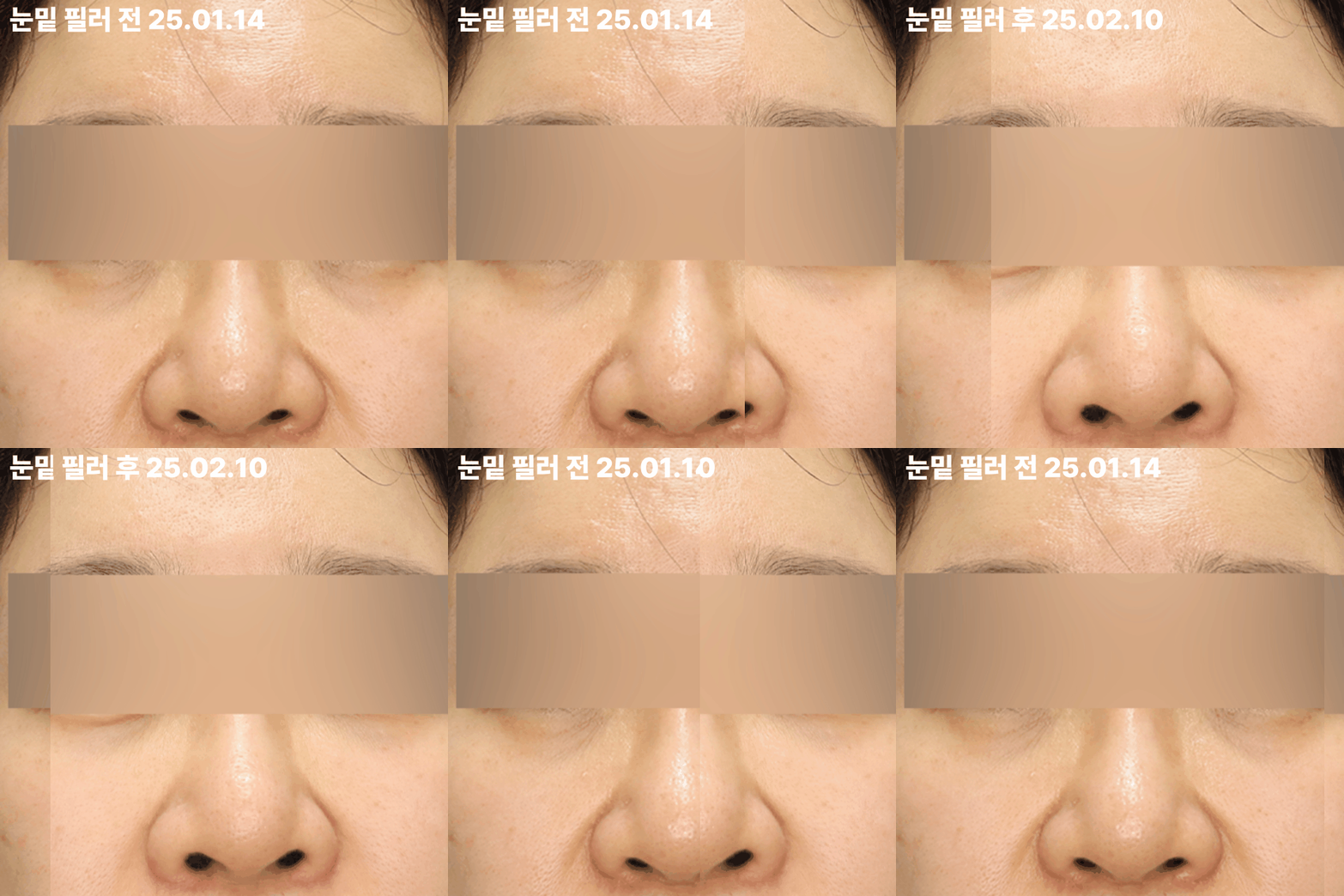
2. Why you should receive fillers from a clinic that can ‘treat complications’ from the very beginning
The ability to treat complications becomes a key criterion that determines the safety of the procedure and the quality of the results. The following medical reasons support this:
-- Filler safety requires a combination of ‘anatomical knowledge + material properties + understanding of vascular patterns’.
Filler is not just about creating beautiful lines; it is a highly advanced technique of placing the appropriate type and amount of filler in the correct, safe anatomical layer.
This requires the following elements to work together:
- Location and variation patterns of facial blood vessels
- Characteristics of anatomical planes and fat compartments
- Filler elasticity, viscoelasticity, and cohesivity
- Tissue response according to injection pressure and speed
In medical institutions that comprehensively understand and perform procedures based on these elements, the incidence of complications itself is very low.
-- The ability to respond to complications determines the ‘pre-procedure strategy’.
Institutions with extensive experience in treating complications make the following strategic judgments before a procedure:
- Is the area in question a high-vascular-risk area?
- Is it an area where filler structurally tends to accumulate, leading to edema or foreign body reactions?
- Are there existing filler residues or fibrotic tissues?
- Which layer requires reconstruction (Volume Restoration) based on the direction of aging?
These judgments dictate the design of where and how to place the filler. Ultimately, a ‘natural and long-lasting filler’ in the true sense is possible only in places that accurately perform such fundamental diagnoses.
- Practitioners perform procedures most stably ‘when they have the competence to solve problems’.
Experienced medical staff can quickly assess and take appropriate action if an unexpected situation arises.
For example,
Preservation of surrounding tissue during hyaluronidase dissolution
Immediate correction and diffusion strategy when vascular compression is suspected
Tissue reset process in cases of chronic edema or foreign body reactions
Inter-layer access strategy for fibrotic areas
These abilities are closely related to the ‘fundamental skills for designing safe outcomes’ rather than just technical aspects.
In other words, the ability to resolve complications is also the ability to prevent them.
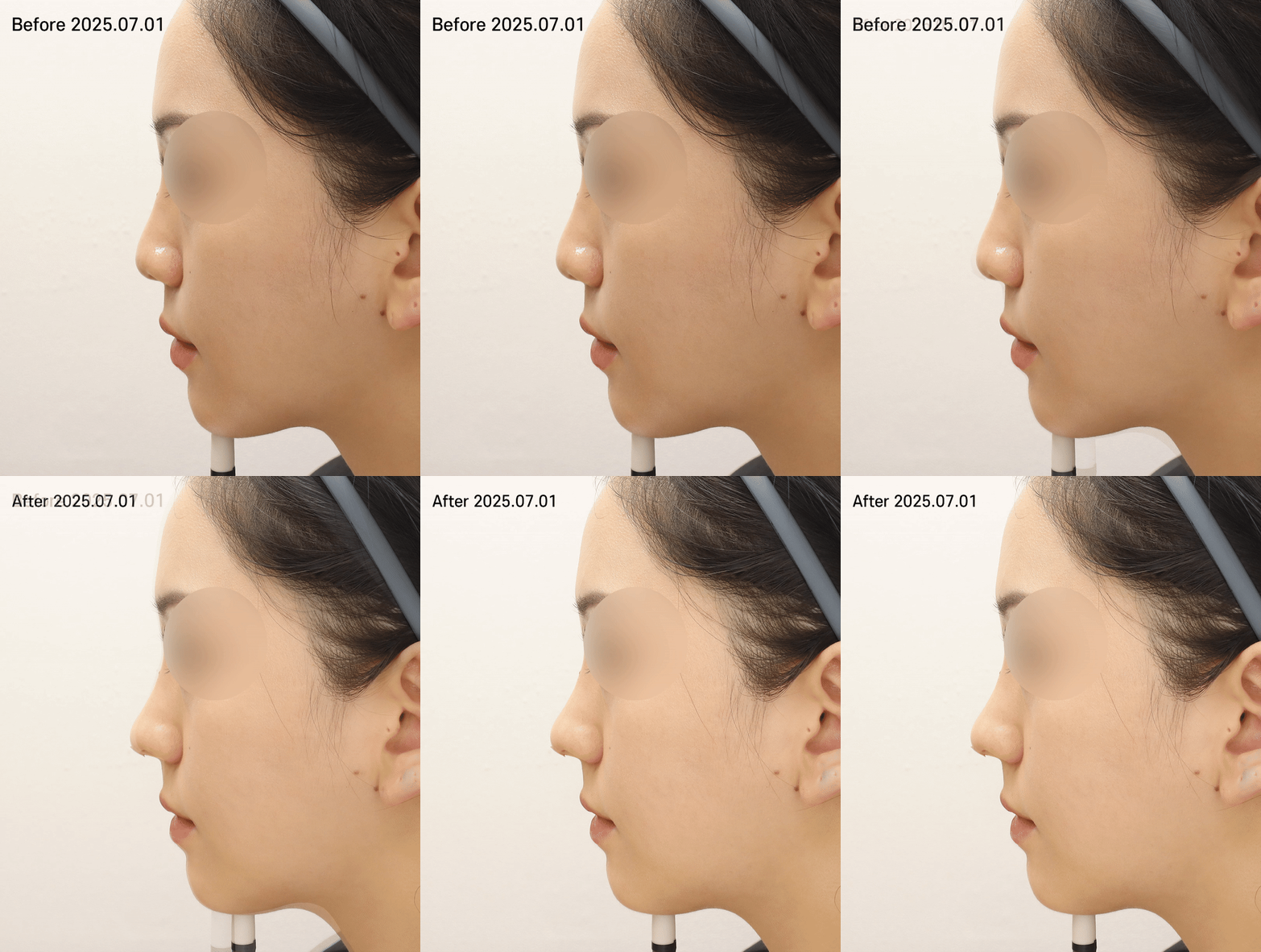
Therefore, fillers should be received from a clinic that can ‘also provide treatment’ from the very beginning.
Filler procedures are not merely a matter of injection technique; they are a comprehensive medical act combining all these elements: facial structure, aging patterns, vascular risk, drug characteristics, and long-term outcome prediction.
Medical institutions with extensive experience in treating complications offer the following advantages:
- The incidence of complications itself is very low.
- If a problem arises, they can respond quickly and accurately.
- They can design natural and stable long-term results.
- Patients can trust them and return for further procedures.
In fact, the proportion of patients who initially visited for complication treatment and subsequently receive all their fillers at the same institution is very high. This is also the most definitive indicator of that institution's clinical competence.