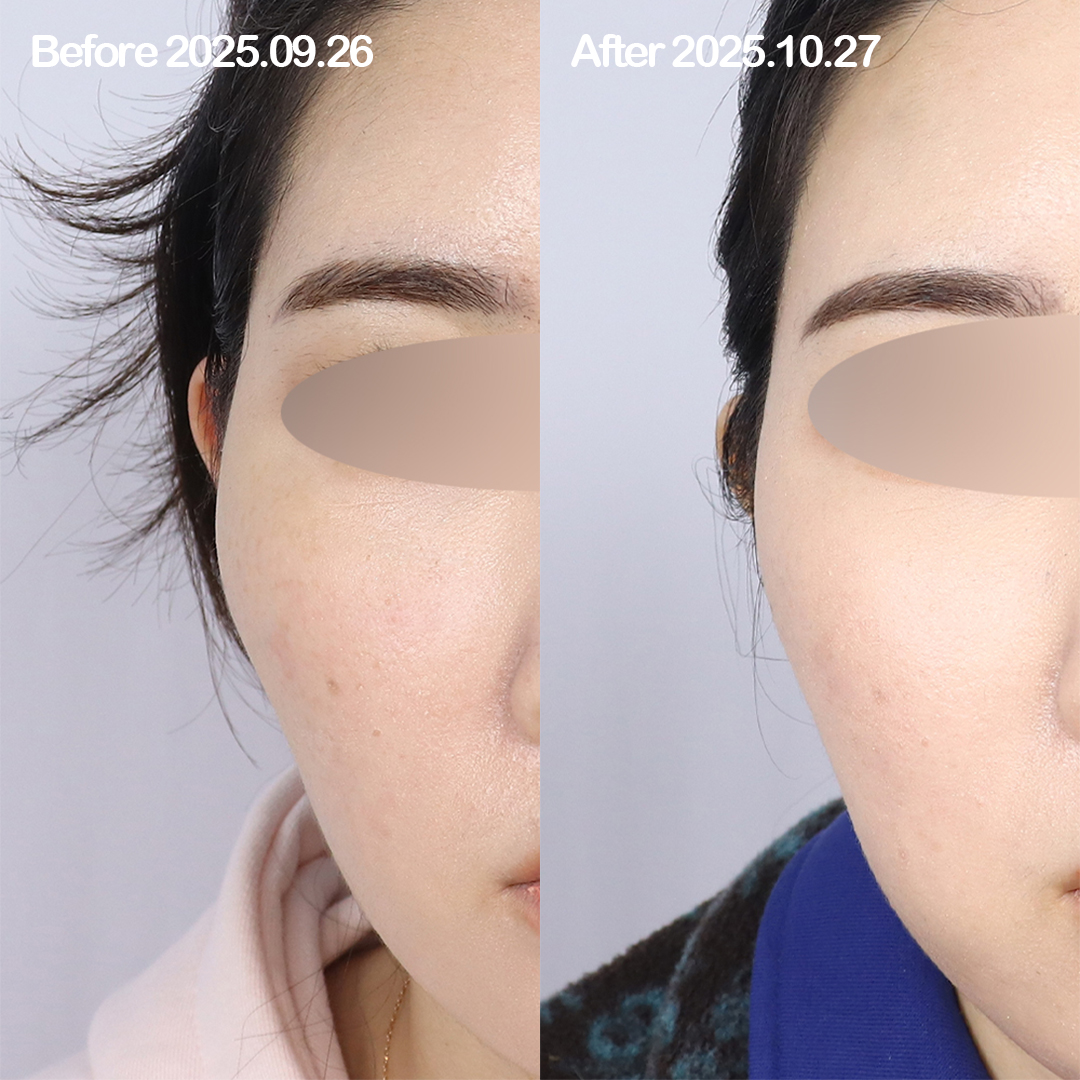
Among facial contouring surgeries, 'lateral cheekbone reduction surgery' is performed to reduce the lateral width of the face and soften its three-dimensional appearance. However, it is known that the actual width reduction of the bone structure through osteotomy is not as significant as one might expect. In contrast, it is increasingly emphasized that similar visual effects can be achieved sufficiently by adjusting the thickness and volume of the skin and soft tissue layers alone.
1. Actual Movement Distance in Cheekbone Osteotomy
The clinically confirmed amount of lateral cheekbone (zygomatic arch) resection is typically around 3-5mm.
Movement beyond this range is significantly limited by anatomical structures, and excessive osteotomy can lead to side effects such as damage to facial nerve branches (buccal branch), temporalis muscle attachment, and zygomatic arch depression.
In other words, the 'bone width' reduced by surgery is only a few millimeters, and the perceived effect of actual facial width reduction
depends more on
changes in the position and volume of soft tissues (subcutaneous fat layer, fascia, SMAS layer) than on bone movement.
2. Thickness and Structural Characteristics of Soft Tissues in the Lateral Cheekbone Area
Specifically, the boundary area between the cheekbone and the temporal region has the following layered structure:
Epidermis and dermis,
Subcutaneous fat layer,
SMAS and fascial layer,
Subcutaneous muscle layer (connection of temporalis and masseter muscles)
This means that the total soft tissue thickness alone can reach an average of 5-7mm,
which is a depth almost similar to the amount of bone structure moved by surgery (approximately 4mm).
Therefore, by precisely manipulating this layer, visual contour improvement can be achieved through non-surgical approaches alone.
3. Principle of Lateral Cheekbone Reduction at B.A.
Reduce the width of the lateral cheekbones through injection procedures alone or in combination with devices.
Cheekbone reduction is not simply about 'melting fat.'
It is a procedure that comprehensively controls skin thickness, fat layer rearrangement, and SMAS layer contraction.
(1) Regulation of Adipocyte Metabolism
Lipolytic agents or agents that promote adipocyte metabolism are precisely injected into the superficial fat layer (2-3mm depth) of the cheekbone area to reduce the size of fat cells.
(2) Contraction of SMAS and Dermal Layers
Induces contraction of the dermis and SMAS layers, leading to an actual reduction in the surface width of the skin.
(3) Lipomodeling of the Inferior Cheekbone Contour
By concurrently using a small amount of lifting filler or collagen stimulator on the inferior margin of the zygoma,
a visual contouring effect can be achieved where the lateral width appears reduced by organizing the vertical contour contrast.
4. Expected Range of Changes
According to anatomical and clinical observations,
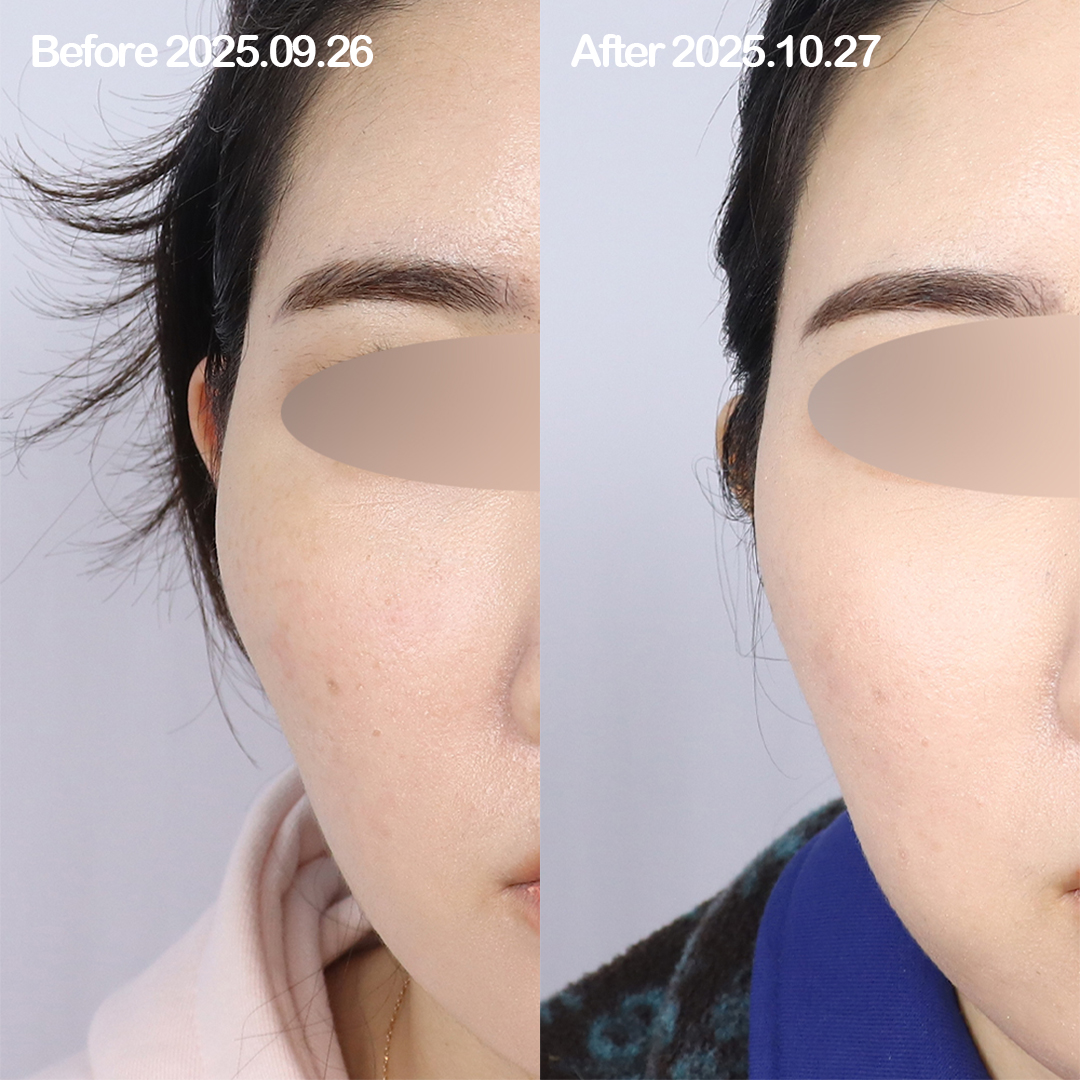
a visual contour change corresponding to a width reduction of approximately 2-4mm can be expected with injection procedures alone.
This figure is close to the osteotomy movement distance (approximately 4mm),
and the effect is particularly high under the following conditions:
When the subcutaneous fat layer is thick or voluminous
When the soft tissues below the cheekbone and in the temporal region are sagging heavily
When the goal is localized contour improvement rather than overall facial width reduction
5. Advantages and Limitations
Advantages
Non-incisional method with fast recovery and low risk of side effects
Easy correction of asymmetry and irregularities
Precise micro-adjustments possible compared to surgery
Limitations
Fundamental solution is difficult for severe bone protrusion
Requires post-procedure maintenance (metabolism promotion, skin elasticity management)
6. Conclusion
Facial contour width is not solely determined by bone movement.
In reality, the thickness of the skin and soft tissues is around 5-7mm, similar to the amount of cheekbone resection.
Therefore, by precisely adjusting this area with injection and device procedures, a non-surgical facial width reduction effect can be sufficiently achieved.